
Describely looks like an AI product-description writer, but that description is too small. The real product is a catalog production line: import hundreds of SKUs, repair thin product data, apply brand rules, generate content in bulk, review it, and send it back to the store.
That distinction is the entire review. If you need five Etsy descriptions, a general AI assistant is probably simpler. If you have 500 products, scattered supplier attributes, repeated SEO fields, and a launch date, the problem is no longer “write me a paragraph.” It is operations.
My verdict: Describely is a strong specialist for ecommerce teams with a real catalog backlog. Its pay-as-you-go pricing is refreshingly legible, and the store connectors, rulesets, enrichment, and bulk workflow address work a blank chat window does not. The limit is equally clear: it can scale whatever data you feed it—including weak or risky data—so human approval remains part of the cost.
The 500-SKU test is more honest than a one-product demo
A one-product test mainly reveals whether the model can write plausible copy. A 500-product test reveals whether the system can prevent 500 small mistakes, keep tone consistent, and let a team see what has been reviewed.
I would evaluate Describely with a mixed catalog: 350 products with decent attributes, 100 with sparse supplier data, and 50 with compliance-sensitive claims. That mix exposes the three costs most demos hide—data preparation, exception handling, and approval.
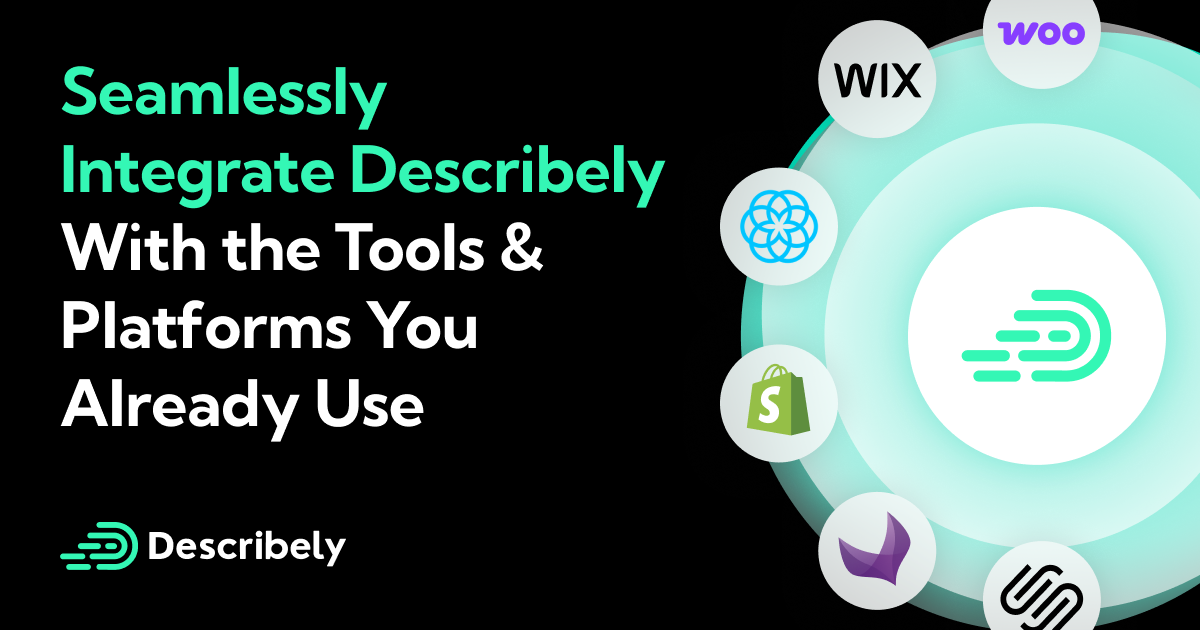
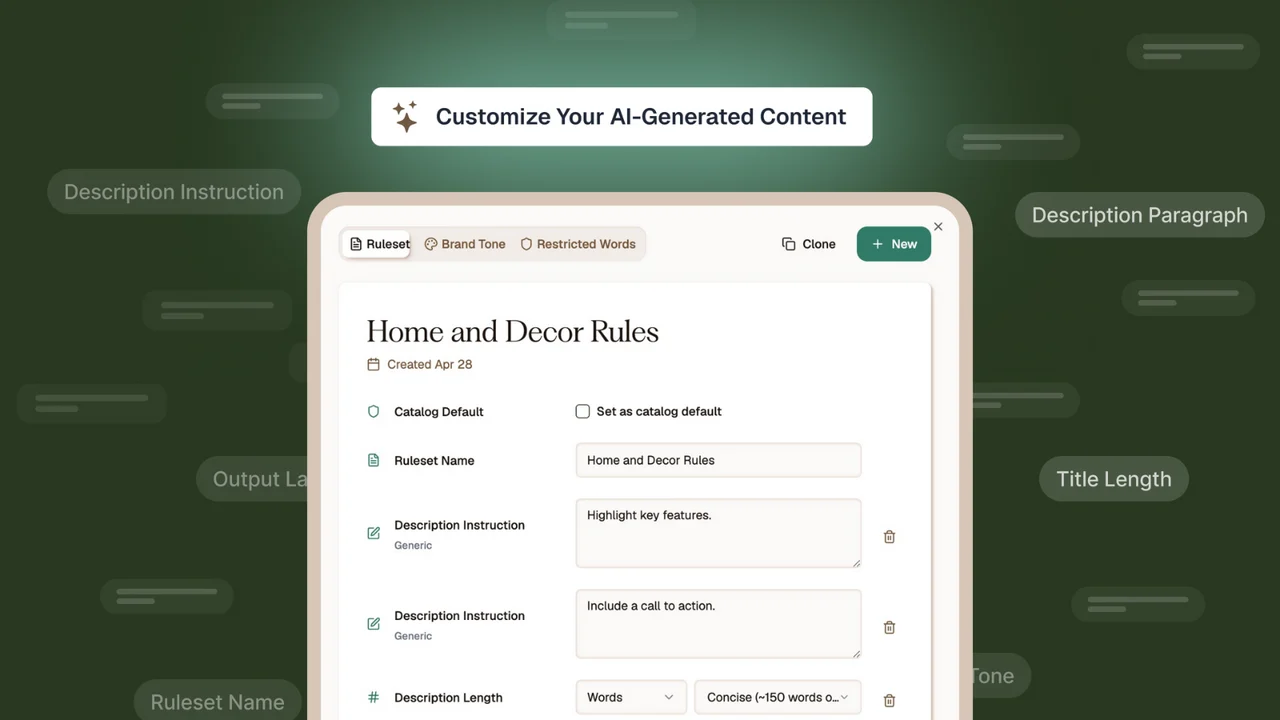
The workflow is deliberately less magical than a prompt. Products can come through store connectors, the team can organize content rules, and bulk jobs can generate titles, descriptions, bullets, metadata, and related fields. Describely’s current knowledge base recommends choosing a content ruleset for a bulk job and optionally using product images to improve generation.
Where Describely saves time—and where it moves the work
Time it can genuinely remove
- Copying attributes into one-off prompts
- Rewriting the same tone instructions for every SKU
- Creating title, bullets, description, and metadata separately
- Moving finished fields back to Shopify or WooCommerce
- Finding obvious gaps across a large backlog
Work it does not eliminate
- Deciding which supplier facts are authoritative
- Approving regulated or performance claims
- Checking variations, materials, sizes, and compatibility
- Resolving duplicate or conflicting product data
- Judging whether the copy actually differentiates the item
I make the same distinction in creator repurposing. Castmagic can turn a recording into many useful drafts, but the recording still needs editorial review. Describely applies that logic to a catalog: generation is the fast part; source quality and public claims remain accountable work.
Describely pricing: the headline is simple
As of August 24, 2026, Describely’s public pricing page shows pay-as-you-go access at $0.75 per product for catalogs up to 500 products. That includes unlimited generations for each paid product, unlimited store connectors, and product-page SEO tools. Data enrichment costs $0.55 per credit and image processing costs $0.05 per credit. High-volume catalogs above 500 SKUs use custom pricing.
The Shopify App Store listing also shows a free option for five products with unlimited AI generations, five data-enrichment credits, and access to image processing. That is a sensible pilot: small enough that you can compare every output, but large enough to see whether rules remain consistent across different product types.
| Catalog scenario | Base generation cost | Likely extra work | My read |
|---|---|---|---|
| 5-product pilot | Free listing allowance | Build one ruleset and compare every result | Enough to test quality, not team operations |
| 100 products | $75 | Enrichment only for incomplete records | Low-risk proof of the workflow |
| 500 products | $375 | Potential enrichment, image processing, and approval labor | Attractive if the backlog is real and repeatable |
| 2,000 products | Custom quote | Governance, roles, sampling, integrations | Evaluate as an operations purchase, not a writing app |
Data enrichment is useful, but it changes the risk
Sparse supplier feeds are a genuine ecommerce problem. A title such as “Blue Chair Model 4” does not give a generator enough to write a useful, trustworthy page. Describely can enrich product data before generation, and its official material positions that as a major difference from general-purpose AI tools.
The benefit is obvious: richer materials, dimensions, features, and category language can produce better content. The risk is that an enriched attribute may look official even when it was inferred or matched incorrectly. I would never let new specifications publish without an approval rule.
This principle also appears in my one-video-to-10-posts experiment: automation is most valuable when it creates strong starting points, not when it multiplies unchecked output. A catalog magnifies the same truth.
Describely vs ChatGPT: the workflow is the difference
A general AI assistant is more flexible and may be cheaper for a handful of products. You can write a detailed prompt, paste product facts, and receive a good description. What it does not naturally provide is a catalog view, connectors, rules applied across a selection, product-specific review status, enrichment, and bulk publishing.
Describely is therefore easier to justify as volume rises. It is not automatically the better writer. It is the better production environment for a narrow job.
The same tool-selection principle is why Castmagic and Descript cannot be ranked by a single “best AI tool” score. One organizes downstream written assets; the other edits the source media. Describely should be compared with catalog operations software, not only with blank-page copy generators.
SEO and GEO: useful structure, not automatic rankings
Describely includes product-page SEO tools and talks increasingly about AI visibility or GEO. Structured titles, complete metadata, differentiated copy, and clean product attributes can make a catalog easier for search systems to understand. None of that guarantees rankings or inclusion in AI answers.
Search performance also depends on crawlability, internal architecture, authority, reviews, price competitiveness, inventory, page experience, and whether the description answers the buyer’s question better than competing pages. I would use the tool to remove content gaps, then validate outcomes in Search Console—not accept a generated SEO score as revenue.
For small publishers, this is the same reason I recommend building a real distribution system after production. My repurposing guide keeps one source and assigns each format a job; more pages or posts are not automatically more useful.
Who Describely is for
I would shortlist it for:
- Ecommerce teams with hundreds of incomplete or inconsistent product pages
- Shopify or WooCommerce stores that need catalog import and publishing
- Retail operations that can define brand and compliance rules before generation
- Seasonal backlogs where pay-as-you-go is preferable to another idle subscription
- Teams willing to measure exception rate and reviewer time
I would skip it for:
- A creator who needs blogs, scripts, newsletters, or social posts rather than product data
- A store with ten carefully differentiated products and time to write them manually
- A team with no trustworthy source attributes
- Anyone expecting AI enrichment to remove factual accountability
If your raw material is media rather than merchandise, start with the AI podcast repurposing comparison. If your problem is editing a spoken video before distribution, use the Descript workflow. Describely is compelling precisely because it does not try to be either of those things.
Final verdict
Describely is worth testing when product content has become a queue, not a creative exercise. The $0.75-per-product structure makes a pilot easy to price, and unlimited generations per paid product reduce the anxiety of paying every time a rule needs adjustment.
I would begin with five products that represent the messy catalog: one simple item, one with many variations, one with weak supplier data, one with regulated claims, and one flagship product whose voice matters. Time the import, generation, correction, and publishing stages. If the rules improve the second batch and the exception rate falls, scale it. If every description becomes a bespoke rewrite, you have learned that your catalog needs data work or human positioning before it needs more AI.
Frequently asked questions
What is Describely AI?
Describely is an ecommerce product-content platform for generating, enriching, auditing, and publishing catalog fields such as descriptions, titles, bullets, and SEO metadata in bulk.
How much does Describely cost?
The public pay-as-you-go plan currently costs $0.75 per product for up to 500 products. Data enrichment is $0.55 per credit and image processing $0.05 per credit. Larger catalogs use custom pricing.
Is Describely free?
The Shopify App Store listing shows a free plan for five products with unlimited AI generations, five enrichment credits, and image-processing access.
Does Describely work with Shopify?
Yes. Store connectors and bulk publishing are central parts of the workflow, and Describely has an official Shopify app listing.
Is Describely better than ChatGPT for product descriptions?
For a few products, not necessarily. For hundreds of SKUs, Describely’s catalog, rulesets, connectors, enrichment, and review workflow are the more important advantages.
Pricing and product facts checked August 24, 2026 against Describely’s official pricing page, Shopify App Store listing, and current knowledge base. Vendor performance claims are identified as vendor claims rather than independent benchmarks.