
SpyFu is the SEO tool I would open when I want a useful suspicion about a competitor—not when I need a courtroom-grade fact. Its best data answers questions such as “which paid keywords have they kept returning to?” and “where might their organic footprint overlap with mine?” Those are excellent starting questions. They are not the same as access to the competitor’s Google Ads or Search Console account.
This review is built around that distinction. I treated SpyFu as an investigation desk: collect clues, rank them, then verify the decisions with first-party data and the live search results.
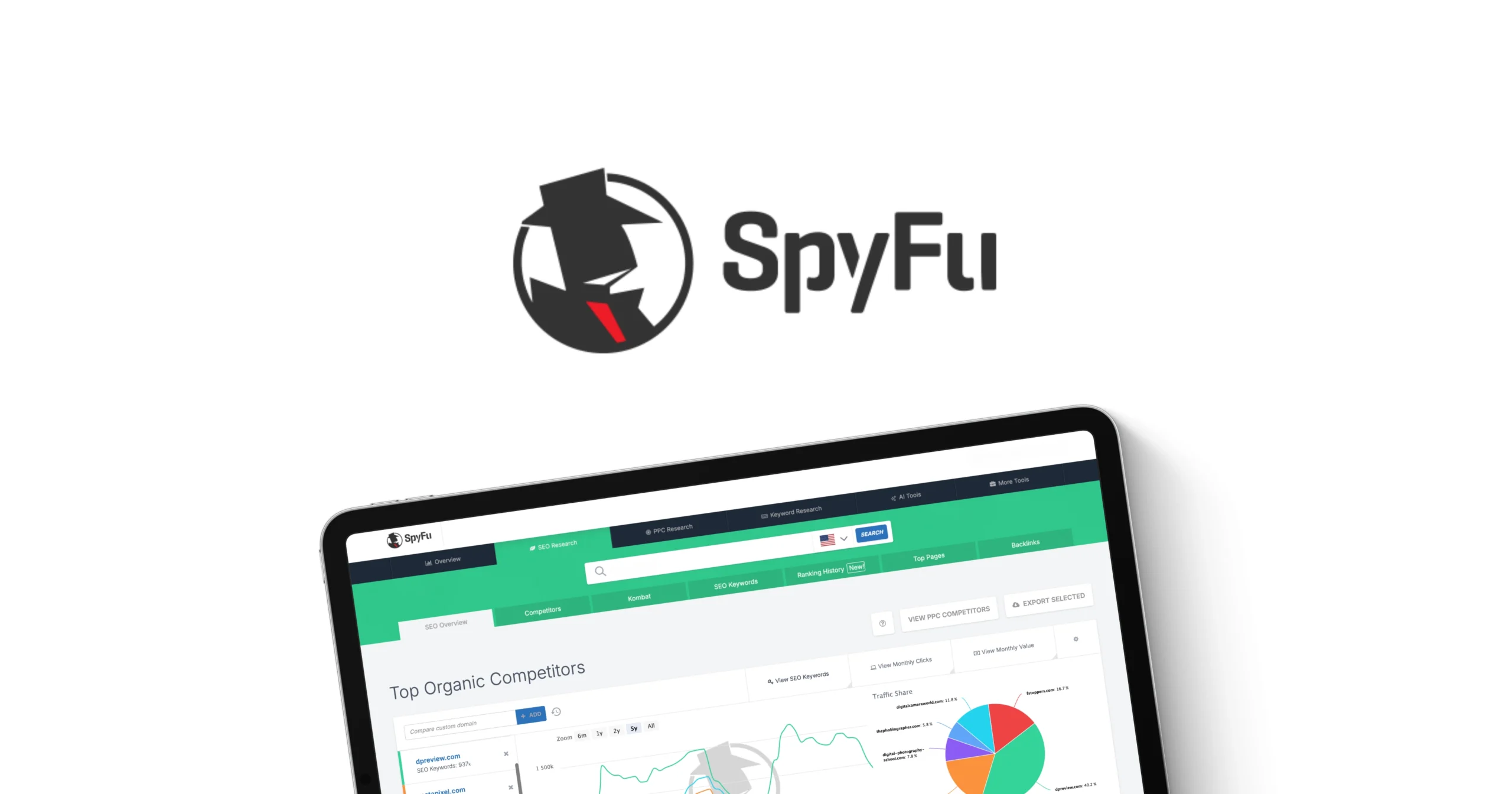
I investigated one competitor in 30 minutes
I started with a competing domain rather than a keyword. That is where SpyFu feels most distinctive: enter the site and it assembles organic keywords, paid terms, ad-history patterns, ranking movement, and rival overlap into one research trail.
My goal was not to download 10,000 rows. It was to leave with three defensible actions: one content gap worth checking, one paid-search theme worth pricing, and one assumption to reject.
SpyFu gives me clues
- Estimated keyword positions and traffic
- Ads observed over time
- Possible competitors and shared terms
- Historical movement and recurring themes
- Keyword opportunities to inspect
I still need proof
- My Search Console impressions and clicks
- My Google Ads search-term and auction data
- The current live SERP
- Conversion rate, margin, and lead quality
- Whether the competitor still prioritizes the page
This is the same editorial discipline I use when researching creator tools. A polished vendor dashboard can organize a decision, but official documentation and the product itself still have to support pricing and feature claims. My Descript review, for example, separates hands-on workflow judgments from official plan limits rather than blending them into one confidence score.
What SpyFu does unusually well
Historical PPC research
The paid-search history is SpyFu’s clearest reason to exist. A keyword a competitor appeared on once may be noise. A keyword family supported by repeated ad copy across many months is a stronger clue that somebody kept testing or valuing the market.
I still cannot infer profitability. The advertiser may be stubborn, measuring a downstream sale I cannot see, or bidding on a term for brand defense. But duration and repeated messaging give me a far better interview question for the data than a single screenshot.
Fast competitor orientation
SpyFu reduces the blank-page problem. It surfaces neighboring domains, ranking terms, content gaps, and ad themes quickly enough to plan a research session. For a small team, that can be more useful than a broader platform whose best features remain unopened.
Affordable access and generous research limits
The Basic plan starts at $39 month-to-month or $29 per month when billed annually. SpyFu currently lists 10,000-row search results and exports, more than ten years of historical data, one live site-tracking project, prebuilt Google Ads campaigns, GSC integration, white-labeled reporting, and API access in the current purchase table. The exact inclusion table has changed over time, so I would verify the checkout before relying on one feature.
The accuracy question: estimates are not errors, but they are not facts
“Is SpyFu accurate?” is one of the most common questions around the tool. The honest answer is that accuracy depends on what you mean. It can accurately show that SpyFu observed an ad or recorded a historical ranking. It cannot know a competitor’s private conversions, exact daily budget, match types, negative keywords, or true organic clicks.
Estimated search volume and traffic are modelled from third-party datasets. Low-volume niches, local results, volatile queries, and personalized SERPs can make the distance from reality larger. Even excellent third-party tools face that boundary.
For content strategy, this protects you from copying the wrong lesson. A competitor page with an impressive estimate may rank for irrelevant international terms or attract visitors who never convert. In a creator workflow, volume is equally misleading: my one-video-to-10-posts experiment produced many publishing slots, but the useful measure was whether each format had a distinct job.
My SpyFu workflow: from clue to action
Start with a domain that competes for the same audience or sale—not merely a large site that appears on one keyword.
Look for repeated ad groups, long-running copy, and clusters of related organic pages rather than one spectacular estimate.
Check current intent, page types, freshness, and whether Google is still rewarding the same answer.
Use GSC impressions, your paid search terms, conversion data, and sales feedback to decide whether the clue is relevant to your business.
Create one landing page, content update, or tightly controlled campaign. Do not turn a competitor export into a quarterly roadmap.
For Content Tools Lab, the equivalent is building clusters around proven creator problems. The AI podcast repurposing tools guide connects recording, editing, clips, and written distribution because readers search across that workflow. One keyword tool cannot decide the cluster without understanding the audience task.
SpyFu pricing in 2026
There is some inconsistency across live SpyFu purchase URLs and third-party reviews about the exact middle-tier presentation. The official pages currently show Basic and Team/Agency clearly, while plan-specific pages have displayed different Professional or Pro + AI annual rates. That is precisely why I would verify the live checkout for the middle plan rather than repeat an old table as permanent fact.
Basic is the plan I would start with. Upgrade only when an actual limit, API requirement, branded reporting need, or RivalFlow workflow blocks work you already do. “More data” is not a reason by itself; most teams have an interpretation shortage, not a row shortage.
SpyFu vs Semrush and Ahrefs
SpyFu is the focused, lower-cost choice for competitor keyword and PPC investigation. Semrush is a wider marketing suite with deeper site auditing, content, and campaign management. Ahrefs is especially strong for backlinks, organic research, and site exploration.
I would choose SpyFu when the recurring question is “what have these competitors advertised and ranked for?” I would choose a broader suite when technical audits, backlink operations, and multi-channel reporting must live together. Buying the cheaper specialist and then subscribing to three missing systems can become more expensive than starting broad.
This job-first comparison mirrors the distinction in OpusClip vs Descript: automatic clipping and full editing overlap, but the primary task determines the better tool. The feature count is secondary.
Who should use SpyFu?
Good fit
- SEO consultants preparing competitor briefings
- PPC teams researching historical messaging and keyword themes
- Small businesses that need direction without enterprise-suite pricing
- Agencies that can label estimates and verify strategy with client data
- Content teams building a competitor-aware editorial backlog
Poor fit
- Teams seeking a single technical SEO and content operations platform
- Anyone expecting competitor spend, traffic, or conversions to be exact
- Local businesses whose market is too narrow for robust third-party coverage
- Creators who need YouTube-native channel analytics rather than web search intelligence
If your actual bottleneck is repurposing finished media, the podcast content workflow is a better operating guide. If it is automatic short-form discovery, start with the beginner AI clip-generator comparison. SpyFu belongs before content creation, where it helps define a question worth answering.
Final verdict
SpyFu is one of the easier SEO tools to justify because its purpose is narrow and the entry price is modest. I like it most for historical PPC patterns, fast domain orientation, and turning a vague competitor hunch into a short list of things to investigate.
The tool becomes dangerous only when convenience is mistaken for certainty. Use its estimates comparatively, label them, and verify important decisions in the live SERP and your own accounts. Done that way, SpyFu does not need to know the competitor’s exact numbers. It only needs to help you ask a better next question.
Frequently asked questions
Is SpyFu accurate?
SpyFu is useful for directional competitor research and historical patterns. Traffic, spend, volume, and position data are estimates and should be verified with live SERPs and first-party data before major decisions.
How much does SpyFu cost?
As checked August 24, 2026, Basic is $39 monthly or $29 per month billed annually. Team/Agency is $249 monthly or $187 per month billed annually. Verify the middle Pro + AI offer at checkout because live plan displays can change.
Can I use SpyFu for free?
SpyFu allows limited searches without a paid membership, which is enough to inspect the interface. Regular exports, tracking, and deeper research require a plan.
Is SpyFu better than Semrush?
SpyFu is often better value for focused competitor PPC and keyword history. Semrush is the stronger all-in-one choice when you also need broad technical auditing and campaign operations.
Does SpyFu show exact competitor ad spend?
No. Competitor spend is estimated from observed keywords, positions, volumes, and cost data. Treat it as a directional comparison, not private account information.
Pricing and feature facts checked August 24, 2026 against SpyFu’s official pricing, Help Center, homepage, and API pages. Estimates discussed in this review are explicitly treated as third-party estimates.